
Trad Wives Know They’re Submitting. Do You?
There are many ways of obeying in advance. Let's not.

It was February of 2020, boarding a plane back from a trip visiting my cousin and her family in Los Angeles, when I noticed something: Several passengers on the flight were wearing medical masks.
I’d seen the news about a pandemic sweeping China, heard the rumors of quarantines and bodies piling up. But, like many pandemics in other countries before it, I was concerned for them over there, but I hadn’t expected it to reach us over herein the United States.
So when I saw evidence that it could: little white medical masks covering anxious faces on the enclosed metal tube of recycled air I was about to board, it shook me, humbled me. I considered for the first time that this new and mysterious virus could reach our shores.
And, it did.
That same week, our neighbor had a heart attack. While recovering in the hospital, he noted nurses in hazmat on his floor. Soon, we learned the first recorded COVID death in the United States had happened in the hospital bed just next door to him in his unit.
A few days later, a friend who worked in the medical field posted on Facebook: “Pull your kids now. Stop going to work. Even if you are punished, in a week, you’ll be proven right. Stay away from other people and shut yourself in. Now.”
A week later, schools in our area shut down.
At first, most of us globally — it seemed — were in this together. The news of packed hospitals and morgues was terrifying, and trust in government agencies, even in the U.S., while frayed, was not quite fully broken…yet.
But as the weeks wore on, the outrage in the U.S. among those on the right grew, fueled by the president and his pundits: Wasn’t it time to get on with things? People die every day, don’t they? Why were we treating Covid like some new phenomenon when similar diseases made us sick all the time?
These arguments baffled me. Covid was tearing through working-class communities, especially. And the death toll was rising exponentially; some people I knew already had lifelong disabling complications. Mysterious side effects seemed to be springing up everywhere. I wasn’t willing to be Covid’s guinea pig before scientists and doctors had figured this thing out. Why were they?
And then it hit me: Maybe they weren’t. Maybe they had very little choice.
By and large, the average person yelling the loudest about how COVID was a hoax was those on the frontlines of the labor force. They would have to go out into the world and face the virus whether they wanted to or not.
So what better way to break a threat than to saddle right on up next to it? To ride it out. To get it over with. To get sick and maybe die but (if you played the odds right) probably go on living.
For those most powerless to protect themselves from Covid, denying or ignoring their fear was a way they could go on. Keep their jobs. Feel relatively safe, less scared, and even do their work with a measure more dignity, believing they were stronger, braver, and smarter than everyone else.
That’s the power of moral authority. But it wasn’t just them that got to feel it.
For those of us who had the privilege of taking Covid precautions, we could believe we had control over a deadly disease. We could feel pure and morally superior in making “choices” that kept us safer. We could be less empathetic of those who knowingly exposed themselves. We could blame them for their own deaths.
Of course, none of these “choices” and our beliefs about why we made them were quite true or right.
Sure, in those early weeks of Covid, we were all scared, and so little was known about how the virus was spread and what we needed to do to keep ourselves and others safe. But, as the pandemic dragged on, there were many things we did know.
For every accommodation our employers, our government, and our communities made — there were many more we could have made to protect the most vulnerable and keep our communities healthy and strong. But, we didn’t.
We overburdened individuals. Made failures to the safety rules of COVID protections moral failures, despite the fact that the more privilege you had, the better you fared.
And, we didn’t demand as much as we could have and should have, from each other and from the institutions meant to serve us.
Unfortunately, it’s a pattern I’ve seen play out repeatedly in so many “debates” on every “side.”
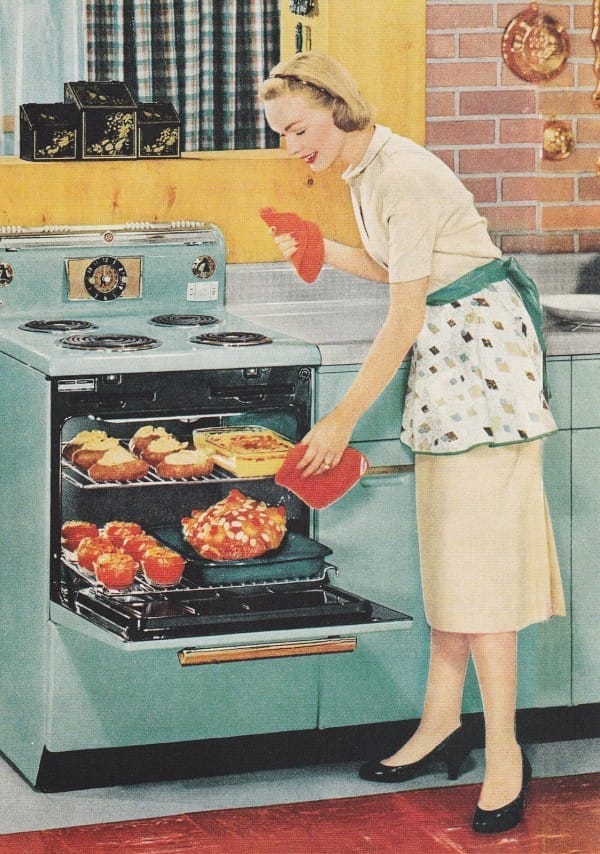
The past few weeks, I’ve been seeing the same tired template recycled by stay-at-home-bordering -on-tradwife influencers all over social media. “Imagine how much propaganda it took to convince women this is oppressive,” the text overlay reads, while a woman snuggles a baby or bakes a cake, or goes up on tippy toes to kiss her husband.
Ironically, these posts, this template, is itself propaganda. As Jessica Valenti pointed out: No feminist says motherhood is inherently oppressive. It’s our system that limits women’s stability and security as parents and partners, that is. As Tia Levings pointed out, these videos aren’t meant to convince those of us who don’t live this lifestyle to consider it; they’re meant to reassure those of us who’ve already chosen it that it’s a good (better?) life (even as they may have doubts and struggles as they do the hard, unappreciated labor of care work.)
The thing is, this propaganda wouldn’t work if we all had more options.
Many caregivers who stay home to care for children or the elderly have few other choices. The cost of childcare compared to their wages is just too high. The demands on their time, energy, and sanity are higher.
And, though there is much to love and enjoy about caring for small children, doing it without support, appreciation, or compensation fucking sucks.
But women doing unpaid labor is a system that only works if we believe it is our fault, our choice to do it. And, it isn’t just our partners and children who benefit from that system.
Our employers do, too.
When the “choice” on offer isn’t a free or fair one: Being led to believe that whether or not we are part of the workforce is a moral choice instead of just an economic and practical one benefits everyone who exploits our labor in that system.
Wherever choice is limited, restricted, or outright impossible — it feels better to believe we did get a say. It feels more reassuring to think we are doing what we’re doing for some higher calling or purpose. We’ll keep doing what we believe we are doing for some greater good.
Because when morality enters the chat, identity and dignity follow. Whatever choice we make, we get to feel moral superiority, and they get to go right on using and abusing us.
And, we don’t demand as much as we could and should from each other and from the institutions meant to serve us.
Right now, women are being purged from the workplace.
For those who are now at home, what feels more comforting to believe about why they’re there: that a growing wave of anti-woman hate pushed them out or that they can find purpose and meaning in a new way, at home serving their families? What feels better for society to believe about why they’re there?
For those taking on more than their share in workplaces where layoffs and increased demands are constant, what feels better to believe? That they are being used in service of something truly sinister (the profits of their employer and the consolidation of power by a few oligarchs) or that they are freer at work than they would be in some other balance of power?
When I left my job as a college administrator right after the birth of our third daughter, it was in large part because we were moving to a more affordable city. A city, unlike Los Angeles, where we thought we might one day be able to afford a home. (Seattle. I know! Laughable now.)
After a year of job hunting, when Lucas landed a new job in Seattle, I was pregnant. I didn’t think anyone would hire me pregnant. I didn’t want to return to work when our daughter was still a newborn. I didn’t think I could reasonably explain a big gap on my resume. And honestly? I made around $30,000 a year at that time, so the cost of childcare pretty much ate up my entire salary.
So, I stayed home.
And, I really (mostly) loved it.
Now, I know our situation was not what many caregivers (especially cishet women) experience. I know many cishet men act entitled to the labor of their partners in ways never expected of me when I stayed home. I know many caregivers (mostly women) suffer financial abuse when they rely on their partner for the entire household’s income.
Which is why, as a feminist, I am very concerned about the current trad wife propaganda that attempts to romanticize forgoing an education, career goals and plans and actively dismantles social safety nets which would help women who do make these choices (or are forced to) to have options still if and when they find themselves in abusive (or even just not-ideal) dynamics with their partner.
To be clear: That has never been my situation.
But, even for me, someone who had relative support as an at-home caregiver, when people mocked or ridiculed me — either outright or more often subtly with their insensitive questions, comments, or disinterest in me once they learned what I “did” — I felt a defensiveness about my “choice” flare up.
Because I knew that the decision we’d made as a family was really the most logical one for our circumstance, but also I often felt working people did not know that they, too, were oppressed.
Did not understand the lengths they were going to to serve and submit to an employer to survive. Did not understand that that transaction — the one where we (especially as women) must fawn and serve to survive is the price we must pay everywhere we exist in the world. Yes, at work, too.
And that, for me, I felt freer out of the workforce than in it. (I know, it is an incredibly privileged position to have been in, but it shouldn’t be.)
In fact, my career is the place where misogyny toward mothers has most held me back.
When I stayed home with my children, was I appreciated? Mostly by my partner. Not really by my preschoolers. Certainly not by anyone in the wider world. But the people who benefited from my labor love(d) me. My investment in them meant something to me beyond some corporate entity’s bottom line.
I controlled our days and how we spent our days.
And not only that: I much prefer my own children to some coworkers and bosses I’ve had. Their tantrums were at least developmentally appropriate.
But at work?
Because I “chose” it, whatever losses to my finances or status I’ve experienced are seen by many as warranted and my fault. (Yes, people have told me so out loud.)
Ask (almost) anyone who has left the workforce to care for small children, and they’ll tell you: There is an undercurrent of contempt for at-home caregivers (mostly women, mostly mothers) and their children in a lot of spaces that claim to be progressive. That contempt lingers even if and when we return to the workforce. It is there, just below the surface, even if we never left it.
Who does that benefit?
So, no wonder the lure of opting out is strong — no wonder that “choice” is on offer at a time when women are being pushed out of the workplace regardless. It allows women who are tired of the dynamics of a misogynistic workplace and abusive labor market to leave it with some measure of dignity. To make motherhood a part of their identity that is worthy of respect they might never receive outside the home.
Sure, it’s a sham. But so is work.
Right now, women’s rights are under attack. Women’s livelihoods are, too. Public health, education, social work, and nursing — work disproportionately done by women — are all being dismantled under this administration.
The workplace, like an abusive partner, threatens our financial stability as a way to make us comply. And the fallout of worsening public health and education will put more demands on all women to do that unpaid labor at home and at work.
Some women, under the lure of patriarchal bargaining, are weighing their options and, on the extreme end “choosing” to obey in advance. That shouldn’t surprise us.
What they understand (whether consciously or not) is that all of us who labor under capitalism are oppressed to some degree by its demands: Mothers (and other caregivers) especially. That we must labor to survive is in and of itself a coercive and oppressive setup.
That, as mothers, the choices of how we do that labor — and how or even if we are compensated for it — are limited is much more so.
And I think that’s why the “imagine” propaganda is so effective. Because many women know they are choosing between different flavors of oppression. (Maybe) an abusive or misogynist husband or, most definitely, an abusive, misogynist labor force or workplace. They are accepting moral authority as consolation and compensation for the incredible value their care work brings to the world, but none of us should have to.
It’s a really shitty choice.
Because security and survival shouldn’t be tied to a job or a man. Each of us should be able to survive and thrive without giving the majority of our life and labor to an extractive system. One bad choice or a series of them shouldn’t bankrupt us (financially, mentally, or spiritually) for life.
But until we all start demanding a whole lot more, it isn’t just trad wives who are settling for less; we all are.
P.S. Men: Step up. We’re tired of this shit. All of it.
What I’m reading/watching/thinking about/listening to:
I’m still on my summer of Morrison bullshit. Join me? Learn more about the order I’m reading in here.
This piece inspired mine. I could think a long time about this subject and whether or not we’re being recruited or retained (based on our current station and status). I read a long time ago that Christian evangelism tactics are not aimed at atheists, but aimed at people who grew up Christian and are already primed to hear a certain message. (I tried to find where I read that for this piece and can’t. :/)
But, I think about it all the time. It’s almost like all of us have been hypnotized and then for the rest of our lives someone says the trigger word or rings that good ol’ Pavlovian bell and before we know it we’re bocking like a chicken. You know?

How to Be Vulnerable on the Internet | Courtney Romano
Courtney’s writing is as beautiful as always in this piece and she and Morrison (you see this, Courtney, I’m writing about you and Toni in the same sentence!) have me thinking quite a bit about vulnerability these days. What kind of openness to our own earnestness, eagerness, hunger, and vulnerability do we each have to have to take ourselves just seriously enough to do the thing and also not so seriously we don’t do the thing? I’m oversimplifying. Read the piece.

Can Men Change | Diana Fox Tilson, LICSW
Can men change? Of course they can. But, for me personally, that change has been most notably in my relationship with my partner, Lucas. If you are a regular reader you know: We met as teens, married super young and so we’ve had a long time to figure shit out together. As a result, I feel like I’ve had many years of enjoying a very equitable relationship.
But, I really admired Diana’s balance of calling it like she sees it and also acknowledging change has happened and will happen. It inspired me to write this piece.

What about you? What are you reading/watching/thinking about/listening to? I’d love to know.
New here?
Every week I share personal reflections, takes on pop culture and current events, and deep dives into U.S. history.
I’ve got four teens, some animals, live in the woods and have a demanding (but fulfilling!) job. And you’ve got well… *gestures at your equally full and hectic and wild and precious life.*
So, I know it isn’t a small ask to ask you to join me here. Still, I’m humbly asking that you do.
NGL, you will be pushed… but never punished. This is a space for learning out loud. For taking steps toward change in your personal and communal life that matter. Because when you know better you do actually have to do better.
But you can do this. We must, together. LFG.
With love — always,

**THIS** is the message I took from “Yesteryear.” It’s so tough to talk about the book and try not to give out spoilers, but for all the talk about how unlikeable Natalie was (and, yeah, I did not want to hang out with her or try to befriend her!), I thought the author did an extraordinary job of setting the scene for every decision she made. They felt understandable. Not ethical, correct, etc., but understandable.
This is so thoughtful and insightful, Diana. Thank you!