
What the "Compromisers" Always Get Wrong
Stop throwing other people under the bus in the name of "unity"

It’s May Day. People all over the nation are striking, marching, & boycotting. LFG.
In that spirit, I’m republishing this piece, lightly edited.
The haunting.
A rusted-out yellow toy Tonka truck parked along the tall grasses. The kids’ rain-rotted treehouse peeking through the woods. The fruit trees, bony branches stretched out like skeletons, dropping dead leaves and overripe pears along the driveway.
Something about our yard feels haunted to me now, like the ghosts of a bygone era are wafting in with the chill of morning breezes. Past versions of myself, of our children, calling to me.
That haunting is time passing, memories and the wisdom they’ve visited upon me coming to the surface. It’s also the knowledge that doors are closing.
When I was younger, I never wished, not ever, to go back in time. I thought it was strange that people around me so often expressed regret or wished to return to their childhoods, to high school, or even to college. I thought my life philosophy was and would always be, “the best is yet to come.”
But what about when the best very obviously isn’t yet to come?
I have entered the season known as the “empty nest”—when our children, one by one, will leave our home. My oldest is already off to college, my second daughter is close behind. The safe, secure season of having them all under one roof is over and I have to settle for Facetimes and phone call, trusting that God or the universe or simple sheer dumb luck will carry them through.
Other doors are closing, too. I now know—probably for sure—I will never have a career as the principal flutist of an orchestra. I will not be a war correspondent or a graphic designer. I likely will never run a marathon (a bad back and a debilitating case of plantar fasciitis have settled that). My body has stretched and now sags in ways that will never bounce back. I will never have another baby. The limits of one lifetime, of my own capacity are coming into full focus.
In this season of my life, I’m not all that surprised that these doors are closing or have closed. I’m a wimp. Living in war-torn countries, risking my health and safety was probably never a realistic option. I’ve had my time on the stage, I’ve raised my family, I’ve run many miles. I’ve made my peace with my aging face, my drooping body. Those seasons are ending or over and that’s okay.
But there’s another door closing right now that feels much more grim.
There’s a haunted feeling I have about our country, too. A dissonant, dystopian feeling I had traveling in D.C., our nation’s capital, a few months ago for work. The soldiers walking through city streets. The many, many for-sale signs swaying menacingly in the breeze. The closing businesses. Trump flags and banners multiplying, raised in more and more yards, on national buildings.

The ghosts of the past, the ghosts of the future heavy, a chill in the air.
The doors are closing to stop authoritarianism in our country. The regime in charge is consolidating power. All three branches of government are captured. The military is being groomed to attack civilians, to abandon the Constitution, the Geneva Conventions, and their oath. Told to prepare to fight “the enemy within.”
This week, in a 6-3 decision SCOTUS basically gutted the remaining vestiges of the Voting Rights Act.
The sudden, aggressive rise of repressive, dominating forces in the U.S. among white, Christian, nationalists over the past decade was termed by scholars “the last gasp” or “the death rattle” of white supremacy in the early 2020s. I sure hope that’s what this is.
Our country and its leaders are sick, possessed by a past where men like them were colonizers and conquerers. But the spirits of other stories, other possibilities whisper to us, too. What can the these ghosts tell us about how to fight for our future?
Who are you in the story?
Do you ever ask yourself who you are in the stories you read? The movies and shows you watch? The religion you practice? What role you would play in a modern-day version of the cautionary tales you learned growing up? Do you see yourself in the people who most closely resemble you, or do you look for yourself only where you hope you would stand? See your reflection only in those who you want to believe you would have been?
Many years ago, when I was still religious, I was part of an international Bible study program. Participants from diverse churches around the world gathered weekly to study the same passage with the same curriculum. That year, we were learning about the plight of the Israelites living under Egyptian rule in the 6th and 7th century BCE.
One week, reading the passages in bed in preparation for our study, the judgment of the prophets struck me and I saw the stories as I had never seen them before.
Suddenly I saw a clear comparison between the ancient Egyptians and us as modern-day Americans. And, I felt like the prophets of the Old Testament were speaking directly to me.
As a middle-class American, I knew I was among a select few around the globe living a life of relative privilege and prosperity while those in other nations suffer at the hands of my government. I expected to show up to the study with others who felt the same.
But during our small group discussion, I noticed that as people spoke about what they learned, no one seemed to offer similar comparisons. Instead, they identified with the passage’s victims: the Jews living as slaves under Egypt’s brutal regime.
A few years later, I was part of a book club. One of our monthly selections was In the Garden of the Beasts by Erik Larson, a book about American diplomats’ relationship to the rising Nazi Party and their willful ignorance about the totalitarianism engulfing Germany.
Again, when we gathered in our book club host’s cozy living room to discuss the book, I was stunned by what I heard. When asked who we might’ve been if similar events occurred today, nearly everyone was certain they would’ve resisted the Nazis. Not one person wondered aloud whether they might’ve been one.
Since those eye-opening incidents, I’ve asked this question to many of my family members and friends.
Who do you usually identify with in the stories you read, watch, and listen to? Who do you think you would have been at some other more perilous point in history?
Most have told me they imagine themselves as the hero. But there’s so much value in really grappling with that any one of us could be the villain, too.
That’s not a compromise.
Since Kamala Harris lost the election last November, there’s been no shortage of “moderate” Democrats eager to explain why progressives cost them the win. Gavin Newsom, Ezra Klein, even my own dad—they’ve all made some version of the argument that if “we” would just abandon the people being targeted, then “we” could finally “win”.
Those arguing this have one thing in common: they’re willing to “compromise” other people’s safety, bodily autonomy, and humanity in pursuit of political “unity.”
And this is the danger of not knowing your history, of believing yourself to be an “individual,” of being conditioned to see yourself reflected as the hero, the victor in every story, in every cautionary tale, every history class.
Because, sometimes? You are the villain.
People acting with our motivations in the past—whether in self-serving or self-preserving ways—have done great harm.
If Newsom, Klein, and my dad knew their history and saw themselves clearly within it, they would see themselves reflected not in the hero but in other privileged, white men’s “compromises” throughout U.S. history, people they surely consider wrong or at least misguided.
For instance, the men who were delegates from both Northern and Southern states during the Constitutional Convention of 1787 agreed to the Three-Fifths “Compromise,” an agreement where all states counted each enslaved person as three-fifths of a person for representation and taxation. In this “compromise”, Southern states gained political power while enslaved people gained nothing.
To make a deal in the Missouri “Compromise” legislators agreed to maintain the “balance” of slave and free states by admitting Missouri as a slave state and Maine as free—expanding human trafficking and human suffering right along with it.
During the “Compromise” of 1877, Northerners made a deal with Southern politicians that ended Reconstruction (a period where newly freed Black people were juuuust beginning to enjoy the rights and freedoms of other Americans) when Republicans withdrew federal troops from the South to install Rutherford B. Hayes as president — they willingly abandoned Black Southerners to Jim Crow terror for the next 90 years.
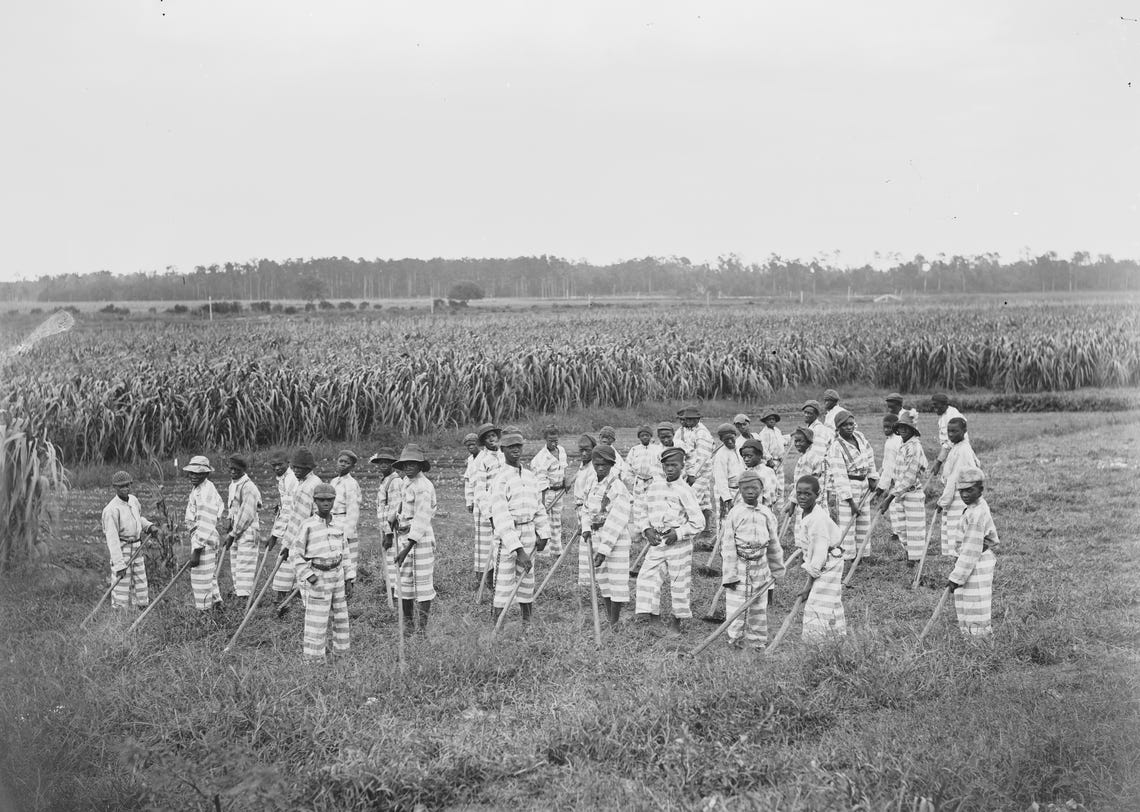
In the past several weeks, I’ve read several arguments defending “big tent” politics that really aren’t big tent at all. They’re arguments that suggest “compromising” protection for trans people, people of color, and women.
These are not “compromises”, they’re human sacrifices — people in power playing games with the lives of those considered usable and disposable offered on the altar of unity and progress.
But there is another way.
In 1969, The Black Panther Party of Chicago developed something called The Rainbow Coalition. The coalition was an alliance that brought together diverse marginalized communities in Chicago; the Young Patriots Organization, the Young Lords Organization, and various other community organizations and street gangs.
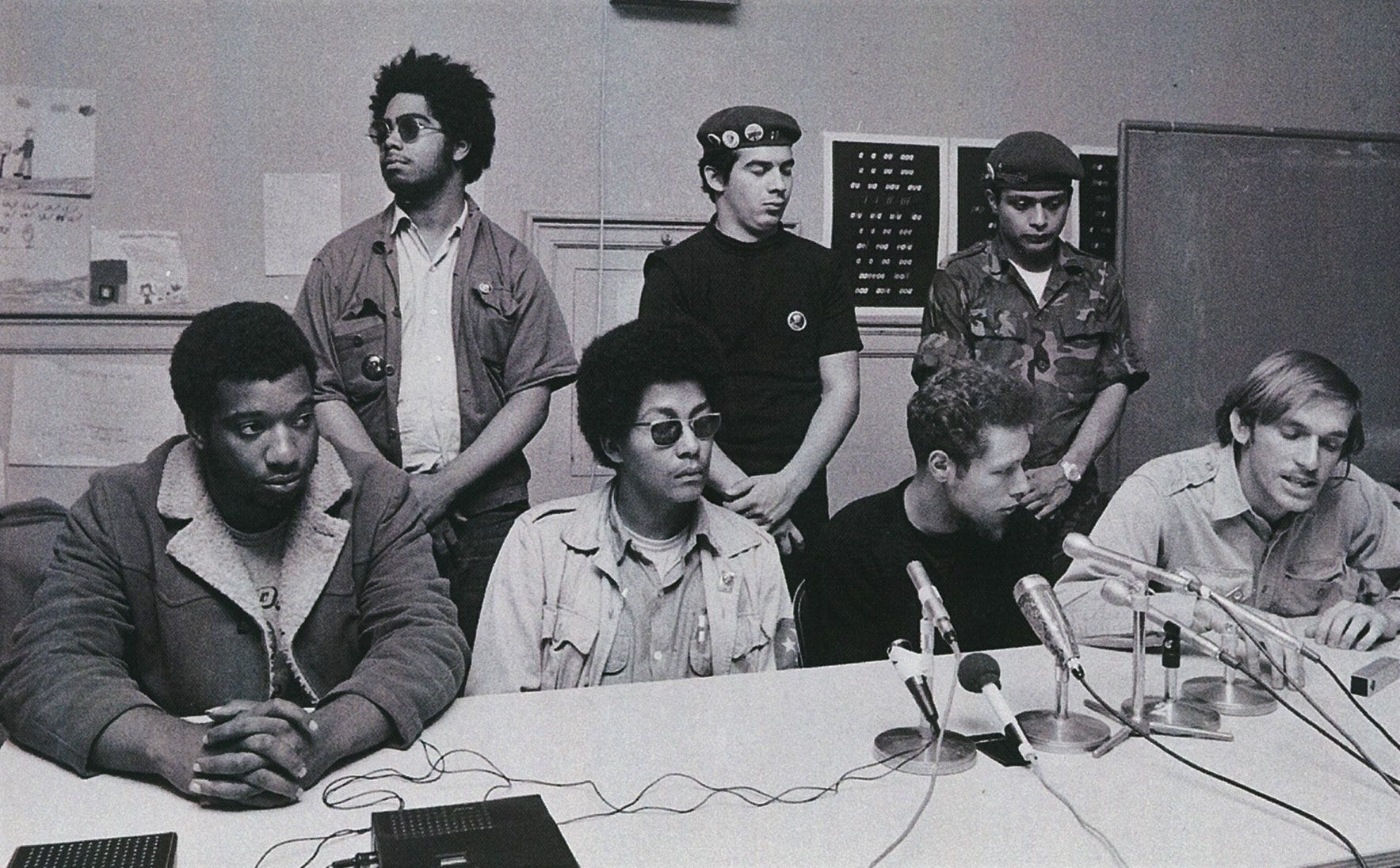
There were many differences of opinion among the Confederate-flag-toting Young Patriots, the Latine Young Lords gang, and the Black Panthers—but it brought together poor and working-class people from different racial backgrounds and varying political beliefs to fight their common enemy: Poverty.
How?
Not by validating the worst instincts of each other. Not by placating or parroting the divisive, hateful rhetoric of those in power. Not by watering down the truth, their values, or their demands for full humanity and equality.
By understanding that “all of us” must truly mean all of us—or it means none of us. By finally seeing that most of us have always and will only ever be on the same side: Fighting for survival, freedom, and the right to live and love in peace. By standing up with and for each other.
I’m taking a break from recommendations on what I’m reading/watching/thinking about/listening to this week. I am still catching up after our shoot for our docuseries over at The Who We Are Project!
New here?
Every week I share personal reflections, takes on pop culture and current events, and deep dives into U.S. history.
I’ve got four teens, some animals, live in the woods and have a demanding (but fulfilling!) job. And you’ve got well… *gestures at your equally full and hectic and wild and precious life.*
So, I know it isn’t a small ask to ask you to join me here. But, I’m humbly asking that you do. I have a goal of reaching 1000 subscribers by the end of the month. If you want to help me reach that goal:
With Love,

Like all your writing, this is exquisite.