
They Disappeared Without a Trace
The "one drop" rule and the choice on offer for some

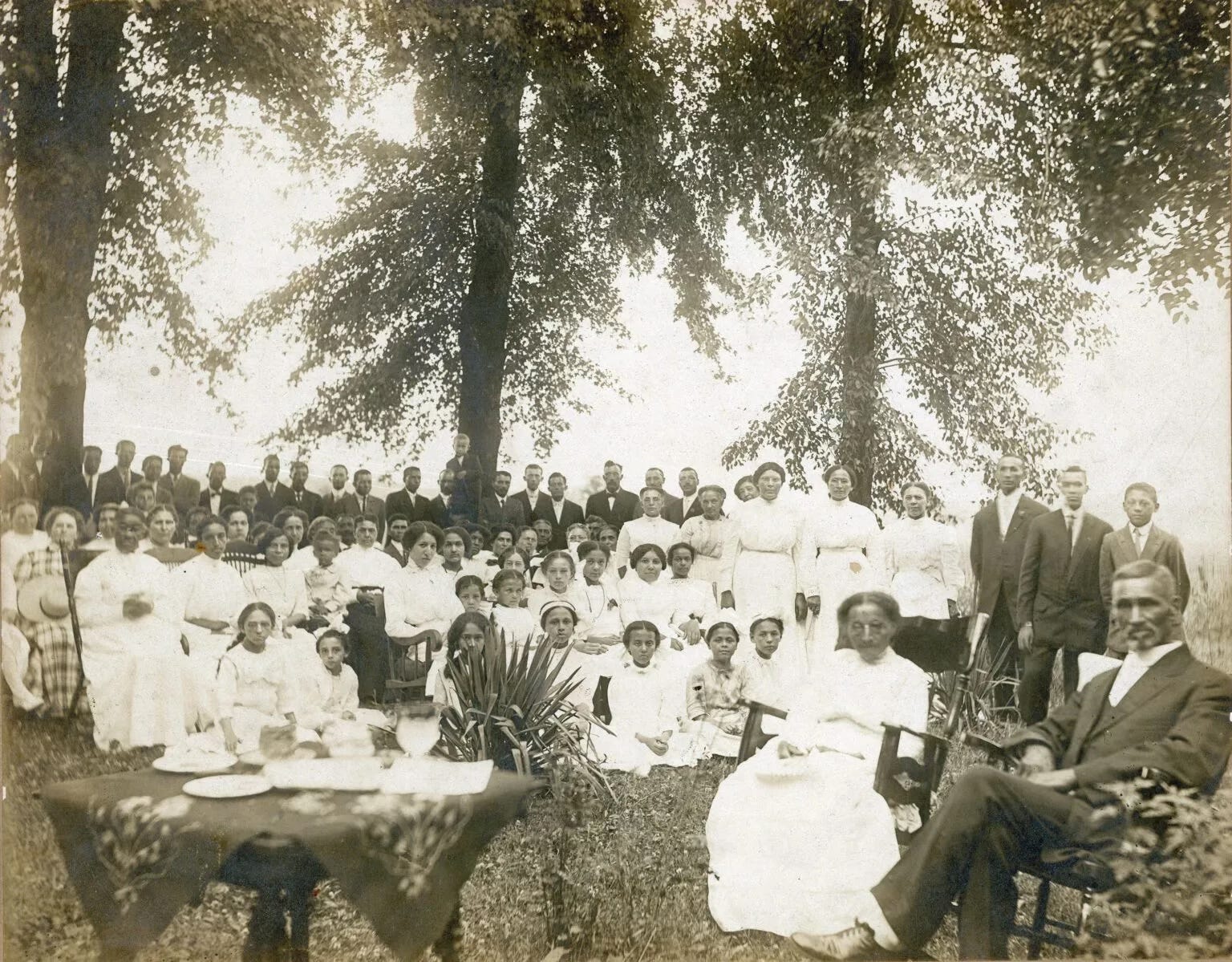
My great-grandmother Catherine—my mother’s grandmother—was raised in Roberts Settlement, one of the oldest free Black settlements in the United States, founded in 1835. Strategically nestled among several Quaker communities, the settlement rested on 1,800 acres of woods and fields.
The initial settlers transformed the land into farmland, growing crops to sell for their livelihood. Historians believe the settlement served as a refuge on the Underground Railroad.
Born in 1903, my great-grandmother was—as they called us then— “mulatto,” like me. The term, meaning “mule,” was derogatory, used for mixed-race children. Though I was born in 1982, I still grew up hearing it often.
My grandmother casually mentioned her mother was “mulatto,” but I never thought about it much until researching more about Roberts Settlement recently. In 1835, only 13% of the 2 million Black people in the United States were free. And, I wondered how the settlement’s founders gained their freedom.
It turns out they were free because they were “mulatto”—children of enslaved Black men and white indentured women who inherited freedom through their mothers’ status under Virginia’s “Partus Sequitur Ventrum” law, meaning “that which is born follows the womb.”
This law codified slavery as not just a life sentence but a generational one. It normalized rape as a money-making venture for human traffickers. It led to fathers enslaving their own children. It declared that all babies born to Black mothers would be enslaved.
I had no idea the law ever produced a reverse outcome for children of Black fathers and white mothers.
Unlike the free people of Roberts Settlement, I’ve always known that in a different era, I would have been enslaved. My great-grandmother would have been too. By the time she was born in Robert’s Settlement in the Jim Crow era in 1903, the laws that allowed her ancestors to be free no longer applied to her parents. Her mother was Black, her father was white. Just like my mother is Black. My father is white. One drop meant that she had fewer rights and privileges. It hasn’t meant that for me.
Still, as a child, I secretly sought out images of white-passing enslaved people in my textbooks, people who complicate the narrative, people who looked like me. What I thought those pictures proved was something that gave me comfort as a child, something that made me feel a part of the family I so loved, something my grandmother was fond of repeating, especially to me, “if you have one drop of Black blood, you’re Black.”
What I’ve since come to realize is something more sinister. What defines race, what determines freedom, has always had little to do with prejudice and everything to do with the economic interests of those in power.
When it served plantation owners, “that which is born follows the womb” was the law of the land. But when it no longer served them, the “one drop rule” would later be codified into law, expanding whose labor could be exploited and extracted.
On January 7, 2026, Renee Good, a 37-year-old American citizen, was fatally shot by ICE agent Jonathan Ross in Minneapolis, Minnesota. Since, protests have erupted across the nation. And in Minneapolis, the administration seems to be escalating its terror: using chemical ammunition against high schoolers, dragging people from their vehicles, then abandoning their cars on the side of the road, knocking down people’s doors, injuring children with flashbangs, and abducting legal residents and citizens.
In the rhetoric that’s followed, I’ve watched as progressive pundits share the “good news” that, for the first time ever, more Americans support abolishing ICE. Charts like these are supposed to be encouraging because *checks notes* 46% of Americans want to abolish the gestapo ICE now.
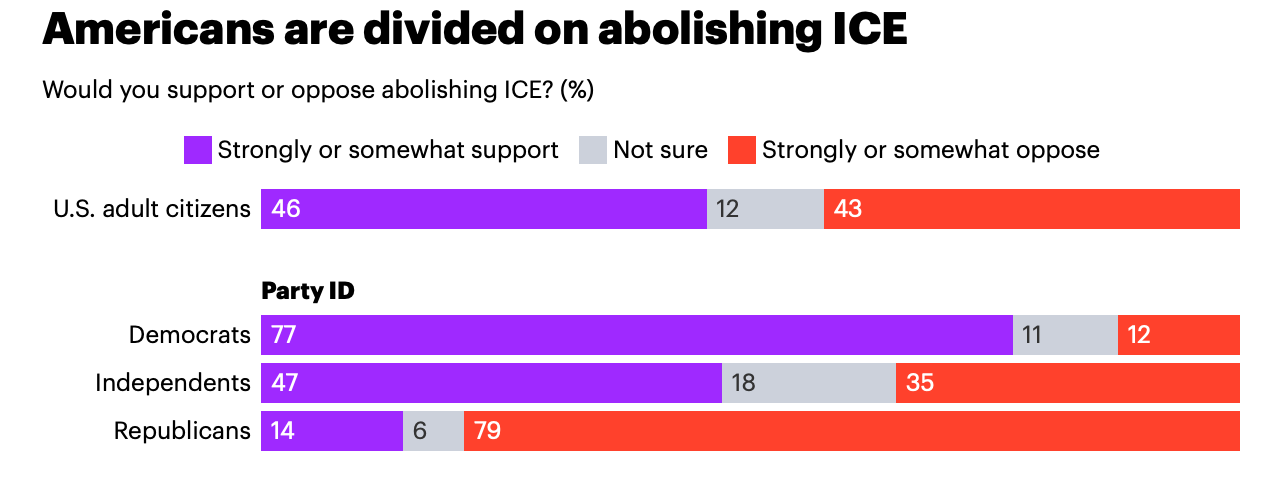
It’s something…I guess.
But how can seventy-nine-fucking-percent of Republicans, the supposed party of small government and states’ rights, support a federal agency invading a city, brutalizing and abducting its residents, and straight up killing people?
It’s the ultimate hypocrisy. But, sadly, it isn’t shocking to me. This has never been about legality, process, or even individual rights. Not now, not at any point in history.
When it was advantageous to Southern slaveholders, they argued for popular sovereignty, the concept that each state had ultimate authority over its laws and could decide whether to be a free or slave state. But as popular (white) opinion began to shift, and support for slavery waned in the North, slaveholding state legislators pushed through the Fugitive Slave Act, forcing all Northerners—regardless of their moral or political stance on slavery—to participate in capturing escaped enslaved people. The law weaponized the federal government to terrorize Northern communities, requiring every person of color to carry “free papers” that authorities often disregarded anyway.
During U.S. westward expansion in the 1850s, when it was clear that Kansas’ population would vote to enter the Union as a free state (tipping the balance of power in Congress), the response wasn’t to respect popular sovereignty, either. Instead, hundreds of pro-slavery settlers invaded the state to rig the election. This led to seven years of violence and volatility in Kansas, known as “Bleeding Kansas.”
Now, we are living through a similar period in history. After years of white supremacist conservatives insisting they were fighting for “states’ rights,” and “legal immigration,” and “life.” As soon as they seized power of all three branches of government, they did not act with those principles in mind. They have no problem with ICE violently disregarding the laws of states with rights they don’t support, abducting Black and brown citizens, and other legal residents. Removing protections for trans folks’ and women’s medical care. Expanding whose labor can be exploited and extracted. Killing people.
Redefining race, and class, and gender, and safety, and freedom to whatever definition serves them.
My grandfather, my father’s father, loved history. He especially loved telling us we were descendants of Zachary Taylor, the 12th U.S. president. I only recently learned that Taylor enslaved hundreds of people on his Louisville, Kentucky estate and was an early expansionist who carried out genocides against Indigenous peoples and free Black communities in places like Florida. (Believe it or not, I didn’t pay much attention in my history classes.)
Now, digging into our family history, I can’t find evidence of our connection to Taylor. We do have the Taylor surname in our family line, so there’s that. But that’s about it. When searching for proof, I came across a blog post titled, “Think You’re Related to Zachary Taylor?”
Spoiler Alert: Taylor DNA Blog says we’re probably not.
I chuckled as I read through dozens of comments that echoed the same story—people told by family that they were Taylor’s descendants. But then I noticed something: some comments were from people like me, those who’d heard from white family members about this lineage. But others were from Black folks who could prove through DNA that they were Taylor’s descendants by tracing their lineage to enslaved ancestors held on his estate.
For decades, likely knowing Taylor enslaved hundreds and slaughtered Indigenous communities, my grandfather proudly claimed this connection. Whatever claims to privilege and power he could claim, he did. We were the descendants of a president of the United States of America.
As I’ve dug deeper into my family history, I’ve made phone calls to multiple cousins on both sides of my family, my mom’s and my dad’s, my Black and my white side.
When I spoke to my cousin, Buster, a new father in his thirties, we shared how dubious we were that the connection we’d always been taught was real. We lamented that we hadn’t listened more closely to our grandfather’s long-winded speeches about our family tree. Maybe we’d have more clues to who our ancestors actually were. But in childhood, we spent little time together. Our parents’ (my dad, his mom) relationship was strained. My father, in particular, always hated going home to Rogers, Arkansas, where my grandfather lived. A place and people that reminded him of the volatility of his childhood.
When I spoke to my cousin, LaVella, my grandmother’s niece, and in her seventies now, she told me she, like my great-grandmother, grew up on Roberts Settlement with her seven siblings. She remembers the deep sense of community she felt, the other families she was raised alongside.
LaVella shared that she still keeps in touch with many of the children she grew up with on Roberts Settlement — with one exception. Occasionally, white presenting families would just disappear. Those families, she said, left the settlement to “pass” a term used to refer to light-skinned, racially mixed people who cho(o)se to deny their Black heritage in exchange for the privileges of whiteness.
When those families left, she never saw those children again.
When I think about Blackness, about “one drop” as my grandmother meant it—as inclusion, as belonging—I see a seat at the table, a home and refuge for all of us.
When I think about whiteness, I think about the choice on offer throughout history to every “othered” group in U.S. history —Irish, Italians, Eastern Europeans, the white passing people of Roberts Settlement — Abandon your community, deny your own humanity, and receive “opportunity” in exchange. Align with power, and you can become “white.”
I see a similar deal on offer now. A similar calculation being made by those clamoring for protection and power. Black and brown people among those in ICE uniforms. White women in MAGA hats. Hoping obedience and conformity mean safety and special privileges.
Aligning with murderers and rapists. Abandoning community. Short-changing future generations. Severing the bonds that make us human.
And for what? Unseasoned chicken and the male loneliness epidemic? All of us have a history and a heritage richer than that. Cords, ties, that should never be cut. Bonds that should never have been broken.
We can do better. We have to.
What I’m reading/watching/thinking about/listening to:
They Not Like Us | Kendrick Lamar
I love this song, and I especially love this phenomenal performance. But, did you know that the “they” in “They Not Like Us” might be referring to multiracial folks? As Lamar himself might say: DAMN.
Jay Z agrees with my grandma. In Story of O.J., he raps, “Light n****, dark n****, faux n****, real n****. Rich n****, poor n****, house n****, field n****. Still n****, still n****.”
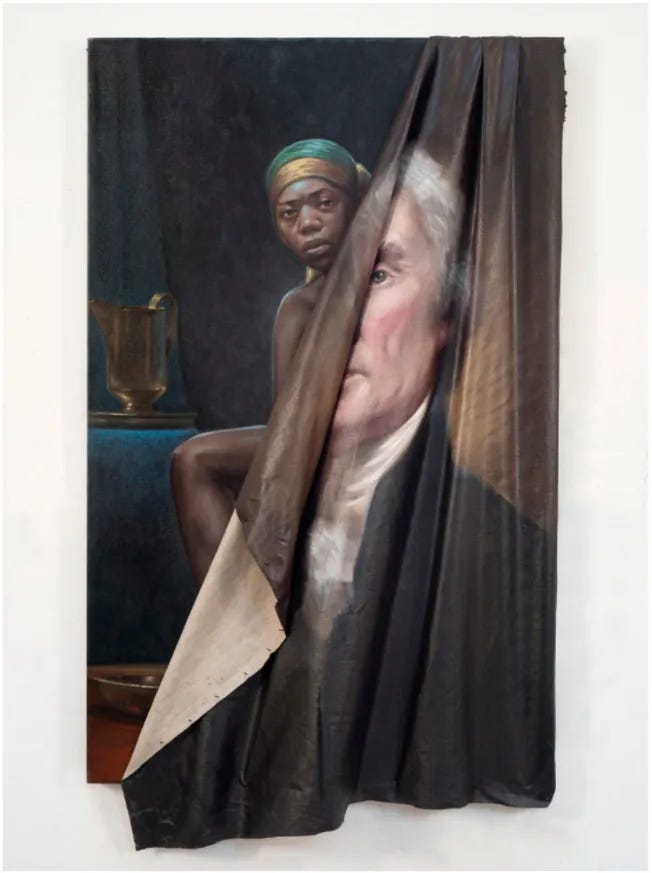
Behind the Myth of Benevolence | Titus Kaphar
I love this painting, which depicts a canvas portrait of Jefferson falling from its frame to reveal Sally Hemings—the enslaved woman Jefferson held captive for her entire life. Jefferson fathered six children with Hemings. All of them remained enslaved by him until his death.
Jefferson began raping Hemings when she was just 14 and he was 44. Hemings was his late wife’s half-sister, the daughter of his father-in-law through rape. So, the real Sally Hemings was, in fact, mixed. And as most Black Americans know, this was a common way “house n****s” were exotified, exploited and abused.
The Vanishing Half | Brit Bennett
One of the best books I've read in the past decade, and one that situates the reader in a history similar to Roberts Settlement. The twins at the book's center are raised in a settlement of other light-skinned people. They believe their settlement is safe—until tragedy and trauma erupt, sending their lives in opposite directions.
The classic novel The Vanishing Half is based on. An eviscerating examination of the competing values of race and class from the perspective of two women both “passing” in different ways.