
Hollywood Keeps Getting Interracial Relationships Wrong
It's More Dangerous Than You Think

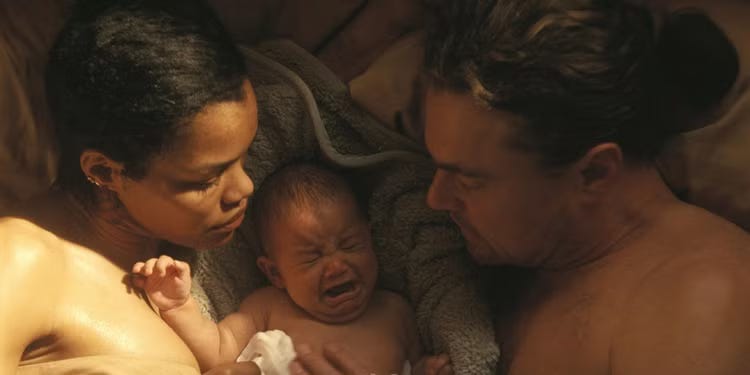
I love being Black, and I am married to a white man.
Lean in closer, and I’ll tell you something I’ve never said out loud: It feels like a contradiction.
A few years ago, at drinks with a close Black girlfriend, the conversation took an unexpectedly vulnerable turn. We poured our hearts out to each other until, a few drinks in, she grabbed my hand, looked me dead in the eye, and said: “Okay, but — Diana. A white man? Whhhhhhyyyy???”
I am deeply in love with my partner. And, it’s a question I’ve asked myself many times. Because I know that in my community, many view my choice as a betrayal.
Choosing Lucas has meant stepping outside certain aspects of Black life in America, perhaps permanently, in ways I didn’t quite think through when we met and fell in love. I am not raising visibly Black children in Trump’s America. I don’t lie awake fearing for my partner’s life during a routine drive to work. I have never had to have “the talk” with my teenagers.
In many ways, the daughter of a white father and a Black mother, I can pass — not just because of how I look alone, but because of how my family looks together. That has afforded me (and us) enormous privilege.
So, I know firsthand: To pretend that the race of the people we date and love doesn’t complicate our identities — especially our romantic ones, our marriages and life partnerships — is to choose willful ignorance of the most basic reality.
None of us can or should pretend to be colorblind, or ignore how centuries of white supremacy have shaped even our most intimate choices. And, I would be lying if I didn’t admit to the guilt that creeps in when I think too hard about it.
Because I made that choice, I can now choose the ease of whiteness. Or, I can choose something different.
On Roberts Settlement — the Freedmen’s Settlement I am a descendant of, occasionally, white-presenting families would just disappear. Those families left the settlement to “pass” at a time when light-skinned, racially mixed people who chose to deny their Black heritage in exchange for the privileges of whiteness had to cut ties with everything and everyone they knew and loved.
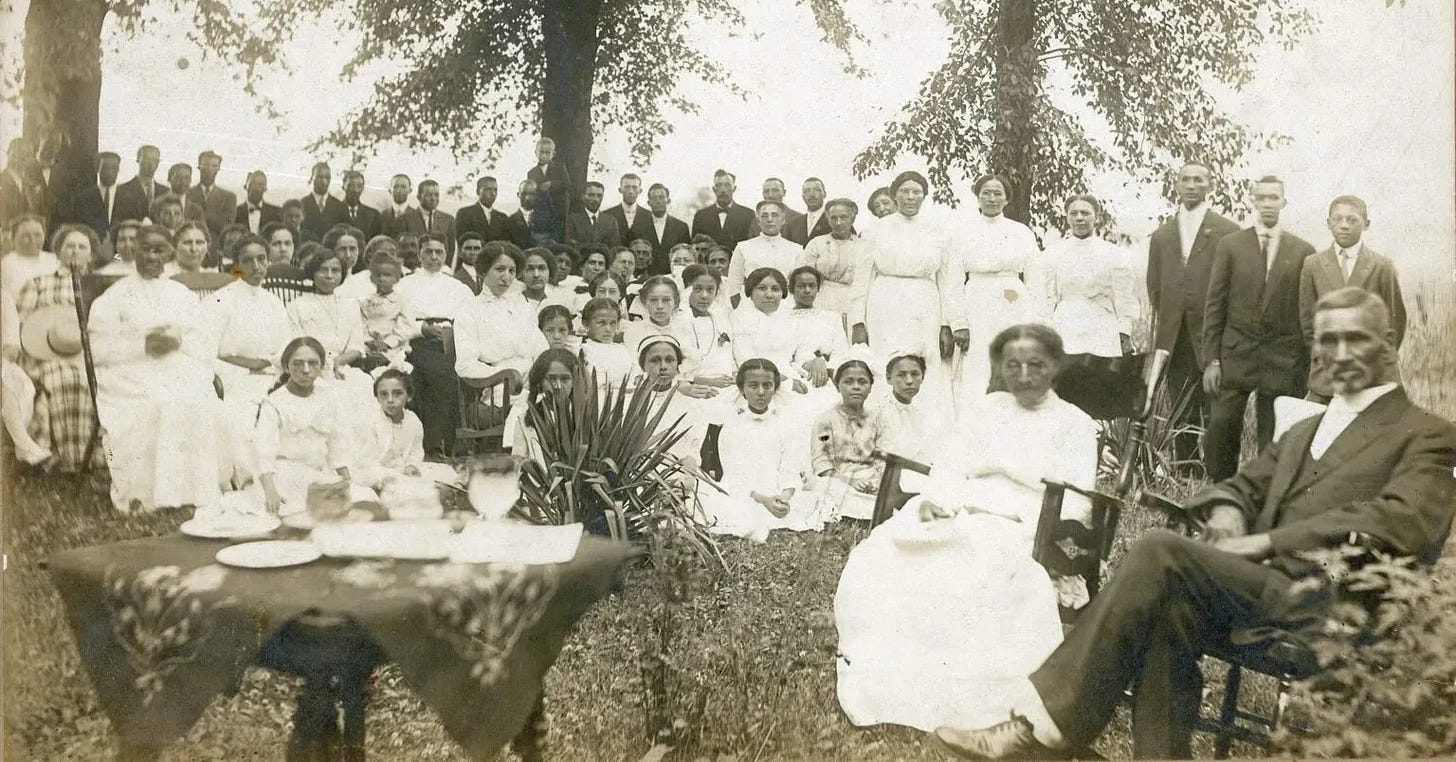
But the vast majority of light-skinned, mixed-race free Black people stayed. They stayed, broadening the definition of freedom for themselves and for others. They stayed, and those settlements were sites along the Underground Railroad.
My grandmother, light-skinned like me, loved to remind me, “If you have one drop of Black blood, you’re Black.” She said it to assure me that I belonged, that my place was with our family, and that, at the heart of kinship, is solidarity with Black people across the diaspora. A rejection of white supremacy.
But she also said it to warn me specifically not to abandon who I am or forget where I come from. She understood the ease of whiteness was on offer for me because I am so light-skinned. She was cautioning me not to be lulled by it.
In the ‘listening and learning’ era of national progressive white guilt in the wake of Trump’s first presidential win and the white shock that followed, I noticed an uptick in films and television shows featuring interracial relationships. Think: Bird Box, The Handmaid’s Tale, The Good Place — and even Spider-Man: Into the Spider-Verse got in on the action (sort of).
At first glance, modern depictions of interracial relationships on screen seem to signal an encouraging increase in representation. But as the product of an interracial relationship, I know better.
As much as he tries, my dad has struggled mightily to unlearn his racism; it just keeps showing up in his beliefs about my mom and his relationship with his children. When I reflect on why, I think it boils down to this: He likes being centered.
When you see interracial relationships in film, TV — or in real life — they’re not always what they seem, either. In fact: The phenomenon of white women using their relationships with Black men, or their status as mothers to mixed-race or adopted Black and brown children, as a pass when called out for racist behavior is so common it has a name: racial gaslighting.
And this Key & Peele skit pretty much sums up what many Black folks think about Black men who partner with white women.
In real life, too many folks in interracial relationships think that having sex with, dating, or marrying someone of a different race says something about them, and think it absolves them of the work to unlearn racism and patriarchy. They use their relationships to center themselves in conversations that are not for or about them.
In film, filmmakers aren’t doing much to dissuade us from that notion. Interracial relationships often function as a signal that the white main character is progressive, but their Black or brown partner? A prop. We know this by virtue of their willingness to sleep with a Black person (get it. They don’t care what people think!) How woke! And — not at all coincidentally — these relationships are also usually supposed to signal that it is the end of the world as we know it for those characters. People with different levels of melanin in a relationship? Cue the zombies, overlords, or demons.
Filmmakers believe they’re doing something new. But, they’re not.
While interracial relationships are on the rise in the U.S. and social acceptance is at an all-time high, many current representations in film and television remain deeply problematic, falling back on age-old, harmful racist stereotypes.
First: Using interracial relationships as shorthand for the end of the world is actually total Birth of a Nation energy.
If you’re not familiar with it, the 1915 film depicts Black men — portrayed by white actors in blackface — as predators and threats to white women, characterizing them as dim-witted and sexually aggressive. Meanwhile, the KKK — a literal domestic terrorist organization — is glorified as noble defenders protecting white women and preserving a racial hierarchy.
Birth of a Nation didn’t just reflect the prejudices of its time — it amplified them and inspired real violence. It served as a KKK recruiting tool well into the 1980s and remains a cult classic among white extremists today.
The stories we tell have consequences.
The same year the film was released, the Klan experienced an official “rebirth” on Stone Mountain, Georgia — still a popular tourist destination — transforming what had previously been a loose collection of small armed militias into a centralized nationwide organization with millions of members by the end of the decade.
By the summer of 1919, white supremacist terror against Black people was so bloody and violent that the period became known as the Red Summer. Thousands of Black people in dozens of cities were maimed and killed by white mobs.
Black men and boys meeting violent ends because of white panic around white women’s “purity” — then and now.
In the early 20th century, the narrative of supposed Black-on-white rape was the most common justification for the brutal wave of lynchings of Black men during that period.
The irony, of course, is that it has always been Black women who have been the targets of systematic, widespread interracial sexual violence. “Partus Sequitur Ventrum” — Latin for “that which is born follows the womb” — were laws that codified slavery as not just a life sentence, but a generational one, and normalized rape as a money-making venture for human traffickers.
After the international slave trade was banned in 1808, traffickers found new ways to grow their human “assets.” In the 1820s, Thomas Jefferson wrote that he considered “a woman who brings a child every two years more profitable than the best man of the farm.” This is chilling given that we now know Jefferson raped at least one woman (a child at first) he enslaved, Sally Hemings — she bore six of his children, the only six enslaved people he freed, and only after his death.
After slavery, Black women sharecroppers and domestic workers continued to experience high rates of sexual assault. In cases of consensual relationships during the Jim Crow era and beyond, white men who fathered children with Black women were far more likely to abandon them. That, combined with family separations due to imprisonment, racial violence, and labor migrations, forced a disproportionate number of Black women to raise children alone throughout U.S. history.
Yet, stereotypes about Black men as predators, Black women as dominating whores, and fatherless Black children persist.
So yeah, there’s a lot of history here.
Modern dystopian films aren’t drawing from nowhere when they situate interracial relationships at the end of the world — they’re drawing from that history. Which is why: Modern dystopian films like One Battle After Another aren’t being edgy when they center interracial relationships in the context of civilizational collapse — they’re legitimizing white panic.
In OBAA, Perfidia — a Black woman leading a liberation movement — is presented as violent and hyper-sexualized, dominating her progressive cuck, simp partner Pat while conducting an exploitative affair with the far-right Col. Steven A. Lockjaw, a white man depicted as helplessly consumed by lust for her. Then there’s Willa, their daughter — raised not by an abandoned Black mother, as has been the reality for countless Black women throughout slavery and beyond who were impregnated by white men with or without consent — but by her long-suffering white father.
These aren’t just tired stereotypes. They’re dangerous ones.
Many people have suffered because of societal fear around interracial sex and mixed-race children. Countless Black men have been brutalized and killed because of white hate and panic. Untold numbers of Black women have suffered sexual violence because of white men’s unexamined desires.
So: What would genuine representation of interracial love and mixed race people actually look like in film? It would show the nuanced reality of loving someone across color lines — the joy, the grief, the guilt, the danger, and the complicated history.
The potential to learn from each other, leverage our privileges, and unite against the true threats to human thriving. The de-centering of whiteness that can come from choosing to love across cultures.
The truth is, interracial sex has always existed. Mixed people have always existed. That’s what history actually teaches us: people have always crossed those lines. Because those lines are imaginary — but they are not inconsequential in our current world.
Ultimately, One Battle After Another isn’t a movie about revolution. It’s a movie about white imagination for the future. In the film’s final scene: Pat is still firmly planted on the couch smoking a joint, as he waves Willa off. He’s okay with her doing the work as long as he doesn’t have to.
That way of seeing our current world and our place in it is available to all of us in some form, especially those of us with privilege. But we can, and we must resist it.
Pat likes “Black girls.”
How do we know Pat likes Black girls? Because early in the movie, his partner, Perfidia, drunk with adrenaline after a detention center raid, yells to her friends (both Black women),“Do you think he likes Black girls?” and he responds, “Of course I like Black girls! This is why I’m here!”
After living through one battle after another to fight the fascist, genocidal forces hell-bent on killing his daughter, Pat still isn’t moved to act for a better world. He has a Black daughter and a disappeared Black lover and so many dead Black revolutionary friends, and a front-row seat to what’s coming — and he is unmoved. Maybe Pat likes Black girls, and that’s why he’s here. But it sure doesn’t seem like he loves them.
Even after everything, even after seeing that he, too, is threatened — Pat still chooses the ease of whiteness.
But (no matter who or maybe especially because of who we love) you and I don’t have to.
Just can’t get enough conversations about Why We Hate One Battle After Another? Join Lisa Sibbett of The Auntie Bulletin and me on Monday about what OBAA gets wrong about communal care (hint: so much) and how to do better IRL. (I believe in us!)
See you there at 10:30am PST.
What I’m reading/watching/thinking about/listening to:
Activating Against Injustice: How to (quickly) get started, restarted or unstuck | ImperfectActivista
I loved this easily digestible and very actionable primer from ImperfectActivista. If you’re struggle to start “doing the work” as I mention in the piece, start here:

Why You Need a Daily Disobedience Practice | Jamila Bradley
Some of us are having a hard time breaking even the simplest of social conventions. We’ve got to get used to rejecting the whole entire premise.
One Fetish After Another: PTA Exploits Black Women and Averts Revolution
If you haven’t already, read Brooke Obie brilliant takedown of One Battle After Another here.

Good, now I don't have to watch that movie. This was a much better use of my time, thanks!
So good, Diana! Sometime I want to hear all about what you’re learning about Roberts Settlement. ❤️